Training Tip: Jog to Counterbend Warm-Up
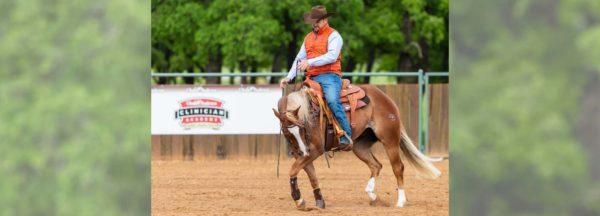
The first 10 minutes I get on a horse, I focus on nothing but seeing where the horse is at for the day and working on making sure he’s soft, supple and relaxed. There’s not a whole lot you can accomplish with a horse when he’s not mentally or physically prepared for a lesson. A horse that is mentally worried or anxious and stiff and resistant throughout his body is not receptive to learning, and forcing the issue will only create more negative behaviors.
A good warm-up not only prepares your horse for the lesson, but is also a way for you to check in with him and see how he’s doing. I tell my students that it’s like politely walking up to someone and saying good morning and shaking their hand as opposed to walking up to them and giving them a wedgie.
I don’t like to do the same warm-up routine with my horses every day. When horses know exactly what you’re going to do, they start to get ahead of you and cheat you a little bit. So as best I can, I rotate the exercises I use to warm my horses up, which keeps them tuned in to me and engaged with the lesson right from the start.
One of the exercises I love to do with my horses is jogging a circle and then counterbending and going back to jogging a circle as seamlessly as possible. I learned this exercise from Ian Francis, and I think it’s one of the best ways to check in with your horse for the day and work on getting any kinks out of him.
While this is a great exercise to incorporate into your warm-up routine, your horse must be advanced in his training to do it well. If you follow the Method in order, you’ll see that we introduce counterbending to our horses in the Advanced level in two separate lessons: Counterbending at the Walk and Trot and Counterbending at the Canter.
Have a horsemanship question or looking for more training tips? Check out the No Worries Club.
