Training Tip: Horse Ducks During the Cruising Lesson
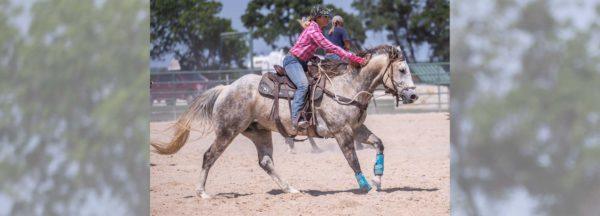
Question: I have a training question about my 15-year-old Quarter Horse gelding. I’ve only had him for a year and really enjoy riding him, but there are some characteristics that I find challenging. I am still in the Fundamentals and am working through the Cruising Lesson. My horse doesn’t trot or canter in circles or in a straight line necessarily. He may be in a straight line and then just turn abruptly and go in the opposite direction, not out of control or anything, but he’s very quick with athletic moves. That makes it harder for me, a beginner rider, to feel confident in the saddle. Today, for example, I was cantering him, and when he got to the end of the riding ring, he stopped dead in his tracks and then turned to go in the opposite direction. Do you have any thoughts on working with a horse like this? – Barry
Answer: Your horse’s behavior while doing the Cruising Lesson is normal and exactly why we do the lesson. The goal of the exercise is to be able to trot and canter on a loose rein and have the horse maintain that gait and speed by himself, not going any faster or any slower. It’s important to teach your horse this exercise because otherwise, you’ll constantly have to babysit him, ensuring that he’s in the gait and going the speed you want, and he’ll never learn to take responsibility.
When riding, there are certain responsibilities for the horse and certain responsibilities for the rider. The Cruising Lesson teaches the horse to take responsibility for his own feet; he should maintain the speed you set him at on a loose rein without trying to speed up or slow down. It teaches the rider to ride with a secure seat. A secure seat means you do not need to hang onto the reins or grip with your lower legs for balance. A secure seat is a very important ingredient for becoming a great horseman. It also teaches the rider not to touch the reins unless the horse actually makes a mistake.
To help stay balanced in the saddle when you’re first doing the exercise, always keep one hand on the horn, and you can even hold the back of the saddle with your other hand. Move with the horse and don’t guess where he’s going to turn.
Horses are smart, but you can’t expect them to learn everything perfectly all at once. Most people want to teach the horse to move forward, stay at the exact speed they want, steer in a perfect circle, and stay collected in a perfect headset all at the same time. You have to break it down into steps. That’s why we don’t work on steering the horse during the Cruising Lesson.
If you’re not confident enough to do the exercise with your horse, find a more experienced horseman who has an independent seat to do the lesson with him. Once the horse is good at the lesson, then you can get back in the saddle. If you’re inexperienced and don’t have a secure seat, riding a horse that doesn’t know how to travel on a loose rein and dives and ducks is just setting you both up to fail.
If you can’t find anyone to ride your horse, another option is to take riding lessons on a well-trained horse. That’ll allow you to get the experience you need to develop a good seat on a horse that’s been there and done that. Once you’re confident in the saddle and don’t need your hands or legs to stay on, then you can teach your horse the lesson.
Looking for more training tips? Check out the No Worries Club. Have a training question? Send it to us at [email protected].
