Training Tip: Know When to Retreat When Building Your Horse’s Confidence
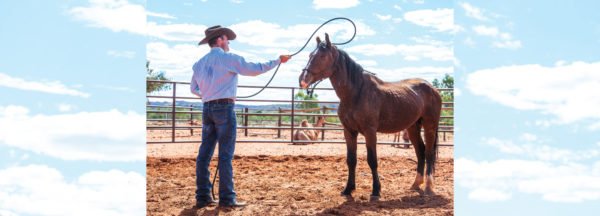
Whenever you desensitize your horse to an object, use the Approach and Retreat Method. Build the horse’s confidence by approaching him with the object that scares him and then retreating (taking the object away) when he stands still and relaxes.
The number one rule to remember when using the Approach and Retreat Method is to not take the object away from the horse until he stands still and he shows a sign of relaxing. A sign of relaxing can be one of five things: 1) licks his lips, 2) blinks his eyes, 3) takes a big breath, 4) cocks a hind leg or 5) lowers his head and neck.
If you do take the object away from the horse while he is moving and using the reactive side of his brain, you’ll teach him the opposite of what you want. Instead of him standing still and relaxed when you approach him with the object, he’ll think the answer to getting away from it is to run. Using the Approach and Retreat Method, you’ll teach the horse that if he stands still and relaxes, he has nothing to worry about. Remember, horses are a flight or fight animal. You have to constantly reinforce to the horse that the answer is not to run from danger, but to stand still and relax. You want him to think that the only way he can feel safe is to stand still and relax.
