Training Tip: Horse Only Backs Short Distances
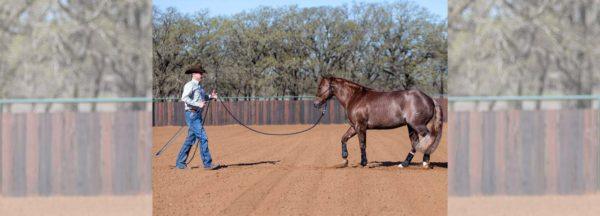
Question: I’ve taught my horse all of the Fundamentals backing up exercises and she does them pretty well for five or six steps, but if I ask her to continue, she pins her ears and tries to run me over. What do I do?
Answer: Without watching you back your mare up, it’s difficult to tell you exactly what’s going wrong. Here are a few possibilities and fixes.
First, make sure your horse understands what you’re asking for and that you’re rewarding a try. I’m not saying that you are, but a lot of people tend to get greedy when teaching the backup. They want the horse to take 10 good steps right from the start. That’s not fair to the horse. When you first teach a horse to back up, only ask for two steps. As soon as the horse takes two steps—no matter how well done they are—reward her. Release the pressure and let her relax. When she can take two steps well, then ask her to take four before rewarding her. Gradually build on the number of steps you’re asking her to take. Don’t go from asking her to take two steps backwards to expecting her to back up 50 feet. That’ll only confuse and frustrate her, which could cause her to try to escape the situation by running around you or defending herself by pinning her ears back.
If you’re sure your horse understands the concept of the exercise and you’re rewarding her and she’s backing up a few steps and then telling you to go screw yourself, it’s time to up the pressure. If you’re practicing Back Up Method 1: Tap the Air, for example, when she stops backing and pins her ears or rears, go from tapping the air in front of her nose to whacking the end of her nose with the Handy Stick. If she understands what you’re asking her to do, you’re past what I call the “cutesy, cutesy” stage. She knows what to do. I’d get up in her business NOW!
There are some horses that have been really lazy and dull for many years and in turn have owners who may not have the ability or the best timing in the world. If I feel I am not being effective with my tools and my horse is ignoring me and not taking me or my tools seriously, I will change tools. For example, I’ll get a dressage whip and whack the horse across the knees or on his nose, and I’ll whack him hard enough to make him say, “Holy shit!” this guy is not messing around! A dressage whip has a lot more bite or sting to it than a Handy Stick. So again, do what you have to do to get the job done. When the horse backs with energy, stop and reward her and try to build from there.
Another tip is to work on backing first in the order of exercises for the day. You want the horse to have some energy in her feet when you work on backing, especially if she is a really lazy horse. If you wait until the end of a session when the horse is really tired and then try to get her to back with energy, you will be wasting your time. She won’t want to put in any effort at all. Also, always remember to quit the horse before she quits you. By that I mean try to get an improvement in her backing and then stop the lesson. If you keep going and going with a lazy horse, she will just shut down and give you no effort at all.
Looking for more training tips? Check out the No Worries Club. Have a training question? Send it to us at [email protected].
