Training Tip: Establish Your Leadership Role
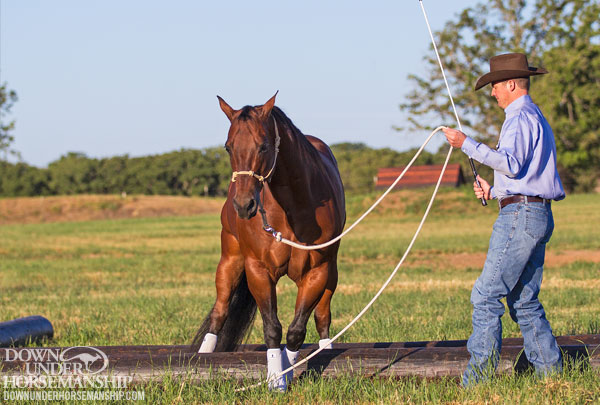
Horses challenge their own pecking order daily, and they will do the same to you. It’s nothing personal – it’s just business. Horses are natural followers, but they want a leader they can respect and trust. Every day, your horse will test you to see if you deserve to lead him. Just like the dominant horse in a herd, you have to be worthy of the leadership role in your relationship with your horse. You have to prove to him that you can move his feet forwards, backwards, left and right and are always willing to reward the slightest try. The number one horse in the herd doesn’t have to be the biggest horse or the strongest horse; he just has to be the bravest and smartest. He has to be the most effective leader. When he tells the other horses to move, they better move or he’s going to back it up with action. He’ll kick, bite, strike or do whatever it takes to get the other horses to move their feet. The more you can move your horse’s feet, the more control you have. The less you can move your horse’s feet, the less control you have and the more disrespectful he will be. Keep that in mind – the more the horse moves your feet, the pushier and more disrespectful he will become.
