Training Tip: Help for a Horse That Won’t Stay in a Stall
Question: My 16-year-old Appaloosa/draft mare won’t stay in a stall. She jumped a 4-foot stall gate from a standstill. After she did, I worked her really hard and put her back in the stall and she reared straight up, pawing to get out. Any suggestions? I’m supposed to bring her to a clinic but don’t know about keeping her in a stall at night. – bethannpanko
Clinton’s Answer: If my horse was jumping out of a stall, I’d get a taller gate to keep her in it. Beyond that, I’d figure out why she didn’t want to be in the stall in the first place. Is she trying to get to her buddies in the pasture? Are other horses leaving the barn for a trail ride and she doesn’t want to be left alone?
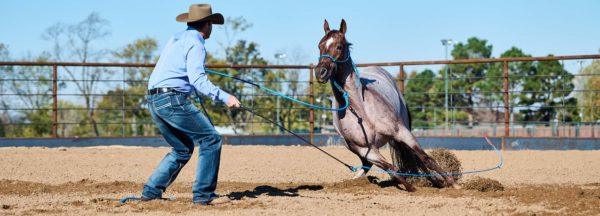
Once I figured out what her magnet was, I’d hustle her feet next to the magnet and then let her rest in the stall or as close to the stall as I could get her before she started getting nervous and reacting. Let’s say her magnet is another horse in a pasture. I’d take your mare to the pasture where the other horse is and hustle her feet with energy. I’d constantly ask her to change directions. That’ll get her to use the thinking side of her brain and tune in to you. A great exercise to use would be Lunging for Respect Stage Two. After a good 10 minutes, or when you feel like she’s listening to you, lead her toward her stall and let her rest.
Let the horse rest five to 10 minutes before taking her back to the other horse and working her again. If your horse is in a hurry to get back to the other horse and doesn’t want to stand still when you rest her, she’s just telling you that you need to go back to the other horse and work her more and try again. It won’t take long before she realizes that she’s only hurrying back to hard work.
Initially, you’ll have to establish a starting point as to how far away from the other horse you can take your mare. Each time you rest her, you can gradually increase the distance from the other horse. The first time you take her away from the horse, you might only get 30 feet away from him. Where your starting point is doesn’t matter. What is important is that you establish one. Once you have a starting point established, then you can gradually build on it.
The most important thing to remember is to quit the horse before she quits you. If you think the horse is going to stop 45 feet away from the other horse, then you stop her and let her rest 43 feet away from the horse. You don’t want to turn going away from the horse into a fight, otherwise you’ll defeat the purpose of the exercise.
Have a horsemanship question or looking for more training tips? Check out the No Worries Club.
