Training Tip: Horse is Resistant to Lateral Work
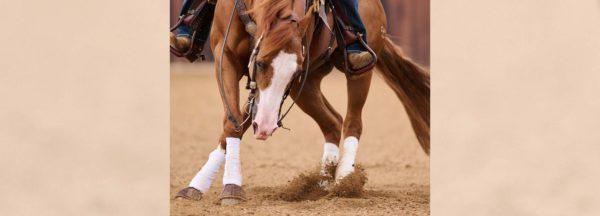
Question: My Thoroughbred is fine when I ask him to move forward. However, when I apply leg pressure to any sort of maneuver, such as two-tracking, sidepassing, etc., he gets super cranky. He pins his ears, crow hops and has a horrible attitude. I’ve had him checked by my veterinarian and even had a chiropractor come out to work on him and there’s nothing physically wrong with him. I know he knows what I’m asking him to do and he does groundwork well. I’m not sure what’s with the attitude. – BWes
Clinton’s Answer: If you’ve ruled out health-related issues, your horse has got your number. He knows that by copping an attitude and making a scene, you’ll release the pressure and leave him alone. I think this is especially true because you say he responds well on the ground. Horses are smart, and your gelding has realized that when you get in the saddle he’s got some leverage on you.
If I were riding this horse, I’d go free his feet up by practicing the Cruising Lesson. I’d put him on a big, loose rein and ask him to canter. First, I’d squeeze gently with my legs. If he ignored me, then I’d cluck twice. If he continued to ignore me or if he pinned his ears back and got snarly, I’d spank him from side to side with the end of my reins or a dressage whip. When you spank, mean business. Whack! Whack! Get in and get out.
When you spank him, he’ll probably kick up with his back legs. You’ll spank him again, and you’ll continue spanking him until he realizes that every time his back legs leave the ground, he feels uncomfortable.
The stickier a horse’s feet get, the nastier his attitude gets. The more you get his feet freed up and moving out, the better his mindset.
Once you have the horse respecting your leg, practice rollbacks on the fence. You’ll find that rollbacks will really free up your horse’s mind and get him taking your cues a lot more seriously. This Intermediate Series exercise is great for horses that have sticky feet because it gives them a reason to get up and go somewhere.
In order to work your horse through this problem, you have to be a reasonably good rider. You can’t be timid or afraid to canter. There’s nothing wrong with that if you are, but you’ll need to get a more experienced rider to help you. Once they have the horse moving out and responding, then you can get back on the horse.
When I was a kid, my parents used to say to me, “If you’re going to whine, I’ll give you something to whine about.” That’s what I’m telling you to do with your horse. If he wants to cop an attitude, you’re going to say, “Let me give you something to whine about,” and you are going to go get his feet moving.
Have a horsemanship question or looking for more training tips? Check out the No Worries Club.
