Training Tip: Transfer Confidence to Your Horse on the Trail, Part 2
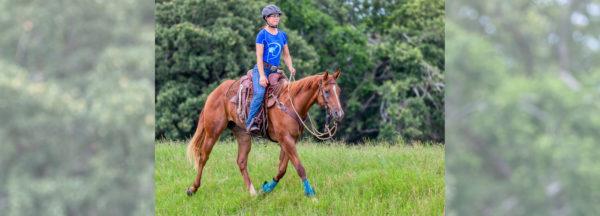
When it comes to teaching an inexperienced horse how to be confident on the trail, it should come as no surprise that the rider plays a key role. A rider’s level of confidence and ability to be a good leader directly transfer to the horse.
If the rider is confident and an active leader, the horse will relax and look to them for direction. If the rider is nervous and jumpy and doesn’t give the horse any direction, he’ll mimic the behavior and become a nervous wreck.
Riders who teach their horses to be confident and look to them for direction share three similar traits. This week we’re going to talk about how being balanced and secure in the saddle gives your horse confidence in you as a leader.
Secure, Independent Seats
A confident rider also has a secure, independent seat. That means you don’t need your legs or reins for balance. You can walk, trot and lope your horse on a big, loose rein without lurching around in the saddle or falling off. You stay balanced and don’t hang onto the saddle horn for security. It also means that you’re comfortable moving all over the horse at all three gaits – you don’t sit on him like a closed pocketknife, scared to move.
Having a secure, independent seat is important when riding an inexperienced horse because from time to time the horse is going to react. He may speed up, get startled and jump out from underneath you, stop suddenly, or take you by surprise in general. He’s not being bad; he just doesn’t have enough experience.
When your horse does jump or flinch, if you tightly grip his sides and snatch the reins, you’re likely to get into a wreck. When human beings get frightened, we tend to curl up into the fetal position. We tuck our bodies up and squeeze with our legs. Most of the time, we don’t even realize we’re doing it. But we end up holding the horse back with two reins and then we squeeze with our legs because we’re nervous. When you tighten up in the saddle and your legs take a death grip on the horse’s sides, you’re very much like a predator that has leapt onto his back for the kill.
Squeezing the horse with your legs is the equivalent to saying, “Hey, would you mind killing me quicker because I don’t want to cook dinner tonight.” You take a hold of the horse and say, “Don’t go!” and then squeeze with your legs and say, “Kill me!” which is exactly why many situations turn dangerous in a hurry.
A lot of people teach their horses to be jumpy by overreacting and feeding their nerves to the horse. It’s like a snowball rolling down a hill – it just keeps getting bigger and bigger and gets more and more out of control.
When the horse reacts, you need to just go with the flow. You’re relaxed and couldn’t care less. “What are you worried about? Do I look worried? There’s nothing to be worried about, Mr. Ed,” your relaxed body language tells the horse.
The important thing to remember about horses is, even when you follow the Method, the unexpected can happen, especially out on the trail where you’re in an uncontrolled environment. If a deer jumps out onto the path or a squirrel rustles some nearby bushes and your horse gets startled, you have to be a good enough rider to stay in the saddle and control of the situation.
Have a horsemanship question or looking for more training tips? Check out the No Worries Club.
